What are Control Arms? | Revv.ly Glossary
Revv.ly Glossary
Suspension links that connect the wheel hub/knuckle to the chassis, controlling wheel movement and maintaining alignment geometry.
What are Control Arms?
Here's what the internet gets wrong about control arms: they're not just "the things that connect your wheels to your chassis." That description is technically accurate but misses the entire point. Control arms are geometry-defining components that determine how your suspension moves--the angles, the camber curves, the roll center. They're the difference between a car that handles predictably and one that fights you through every corner.
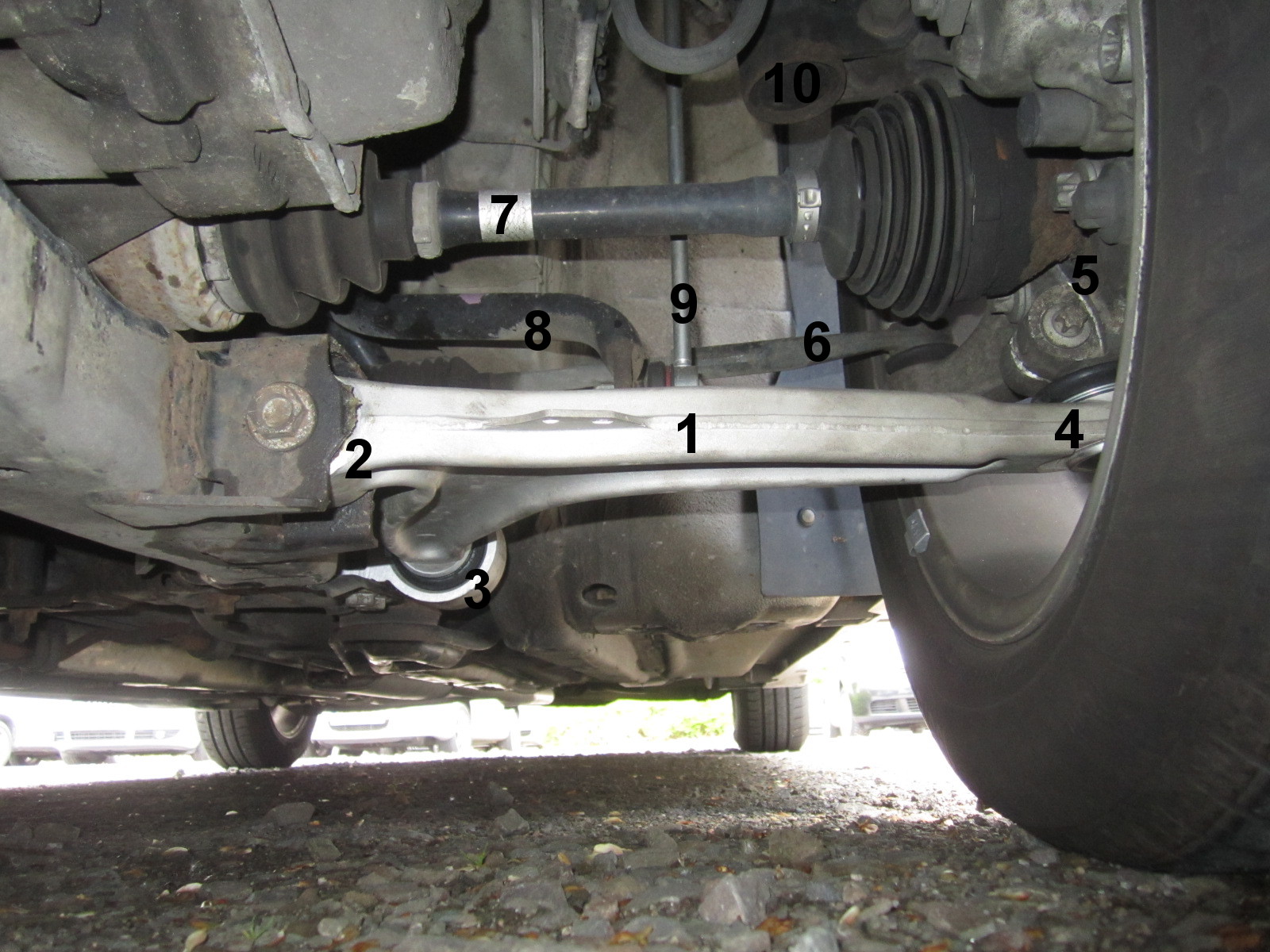
A control arm (also called an A-arm or wishbone) is a suspension link that connects the wheel hub assembly to the chassis. It pivots on bushings at the body end and connects via a ball joint at the wheel end. But what makes control arms interesting isn't what they are--it's what they control.
The Geometry Lesson
Every control arm has specific dimensions: length, mounting point locations, and angle. These dimensions define:
Camber Curve -- How wheel camber changes as the suspension compresses. Shorter upper arms and longer lower arms create camber gain (negative camber increase during compression), which helps maintain tire contact during cornering.
Roll Center Height -- The virtual point around which the body rolls during cornering. Control arm angles directly determine this. Lower roll centers reduce body roll but create other compromises; higher roll centers do the opposite.
Anti-Dive and Anti-Squat -- How the suspension resists pitch during braking and acceleration. Control arm angles relative to the car's center of gravity determine these characteristics.
Steering Axis Inclination -- On front suspension, upper and lower arm positioning affects steering feel and self-centering behavior.
Why Aftermarket Arms Exist
When you lower a car, factory geometry changes. The control arms weren't designed to operate at that angle. Results include:
- Excessive negative camber (or positive, depending on design)
- Roll center migration (often dropping too low)
- Bump steer (steering changes over bumps)
- Reduced suspension travel
Aftermarket control arms address these issues in several ways:
Adjustable Length -- Allows camber correction after lowering. Turn the adjuster, change the arm length, dial in desired camber.
Corrected Geometry -- Some designs relocate mounting points to restore proper roll center and camber curves at lowered ride heights.
Spherical Bearings -- Replacing rubber bushings with spherical joints eliminates deflection under load, improving precision at the cost of NVH (noise, vibration, harshness).
Stronger Materials -- Factory arms are designed for factory loads. Aggressive driving or additional weight can benefit from stronger construction.
The Types You'll Encounter
Upper Control Arms (UCAs) -- Common upgrade on double-wishbone and multi-link suspension. Adjustable UCAs are often the easiest path to camber correction.
Lower Control Arms (LCAs) -- Carry more load than uppers. Upgrades here often focus on strength and spherical bearings rather than adjustability.
Rear Camber Arms -- On independent rear suspensions, dedicated camber arms allow adjustment without replacing entire control arms.
Toe Arms -- Rear suspension toe adjustment. Important for alignment after lowering.
Traction Arms / Trailing Arms -- On rear-wheel-drive cars, these control wheel position during acceleration. Aftermarket versions often feature adjustability and spherical bearings.
The Data on Upgrade Necessity
Here's the honest truth: many lowered cars run factory control arms without catastrophic problems. Tire wear increases. Alignment options are limited. But the car still drives.
However, if you're lowering more than 1.5 inches, tracking your car, or concerned about optimal tire wear, aftermarket arms move from "nice to have" to genuinely beneficial. The ability to dial in proper alignment after lowering pays for itself in tire longevity.
The best approach is understanding what you're changing and why, not just throwing parts at perceived problems.
Join the Revvly community for suspension discussions that go beyond marketing claims to real-world experience.
Related: Camber, Coilovers, Roll Center, Struts
Control Arm Upgrades Common On: Honda S2000, Nissan 350Z, Lexus IS300

